
Energy communities are entering a new phase. After several years of growth, pilot projects and early experiences with collective self-consumption, the challenge is no longer simply to create more initiatives, but to enable them to expand their activities and become active players in the energy system.
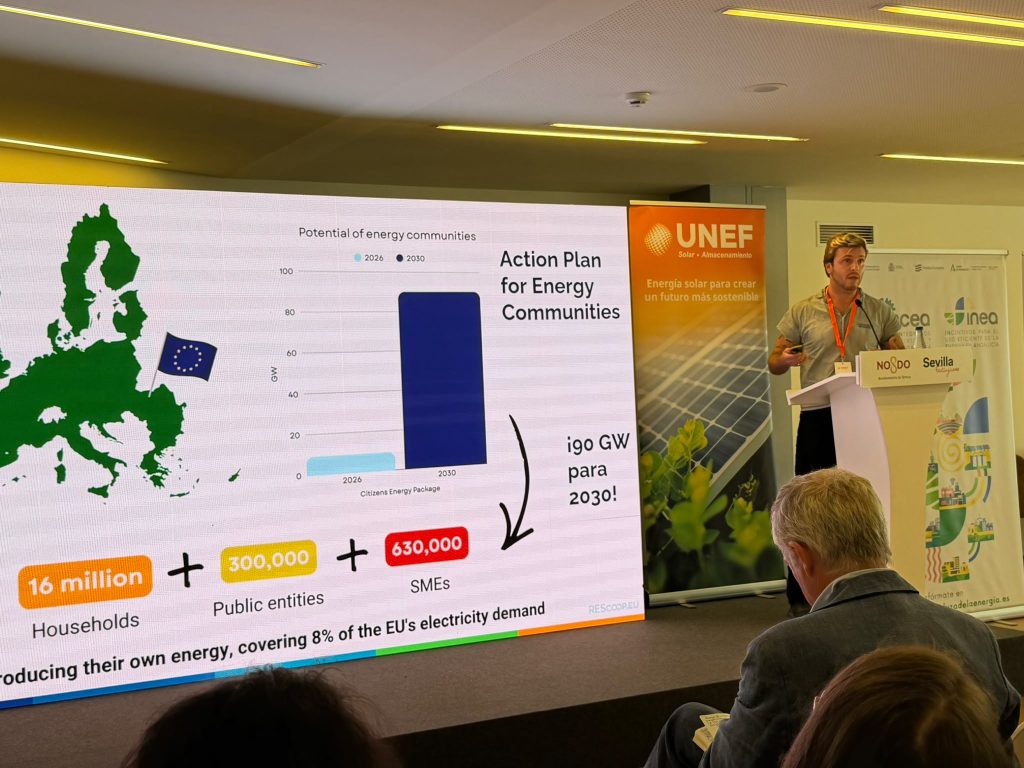
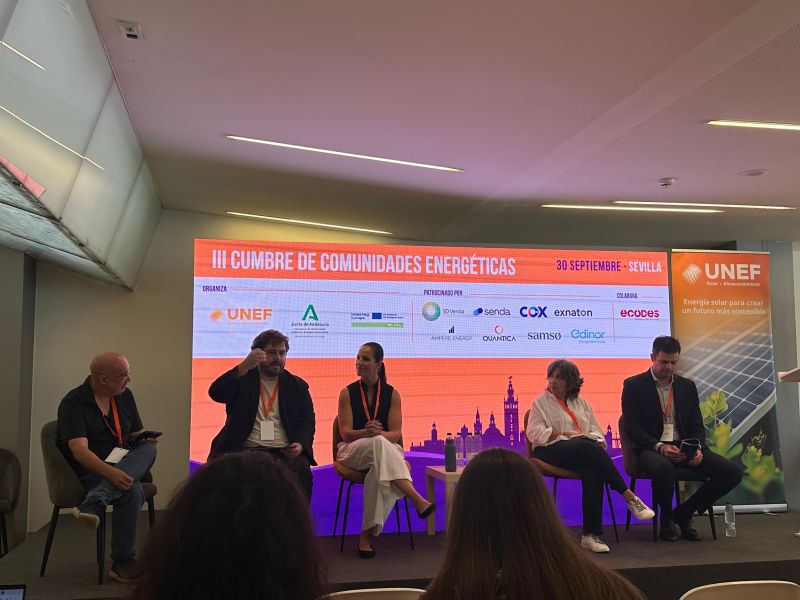
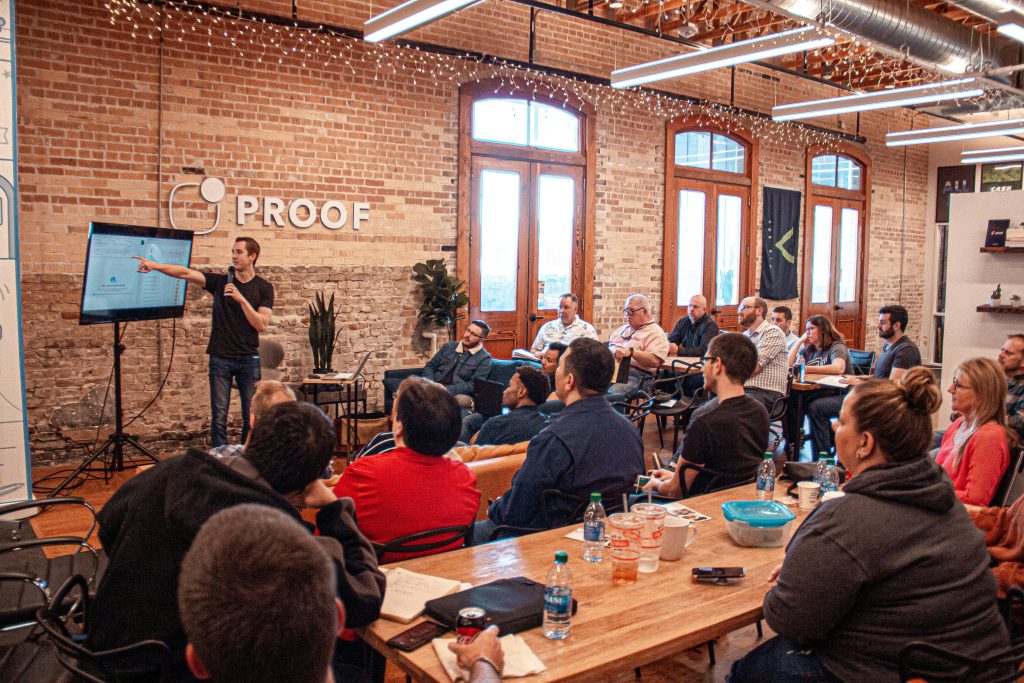
At olivoENERGY, we attended the III Energy Communities Summit, held on 30 September in Seville and organised by UNEF in collaboration with the Andalusian Energy Agency. The event provided an opportunity to learn about practical experiences, share lessons and discuss the barriers that still constrain the development of these models in Spain.
The energy transition is changing both how we produce energy and who can participate in it.
For decades, the energy system has relied primarily on large generation facilities located far from the points of consumption. The growth of renewable energy, self-consumption, storage, demand-side management and electrification is gradually paving the way for a more distributed model. Within this process, energy communities are expected to play a particularly significant role.
Below, we share some of the main conclusions from the event.
From centralised generation to shared energy
Energy communities offer a different way of engaging with energy. They enable citizens, SMEs, public authorities and other organisations to participate collectively in projects involving the production, consumption, storage or management of renewable energy.
Their value therefore extends beyond energy savings. They can deliver economic, social and environmental benefits, bring production closer to consumption and give citizens a more active role in a transformation that has traditionally taken place far from the end consumer.
The ECODES Energy Communities Observatory itself points to their potential to advance towards a more decentralised, renewable and democratic energy model, while creating new forms of citizen participation, shared governance and shared responsibility at local level. The figures show that the model continues to grow.
The ECODES Energy Communities Observatory 2025 identified 837 formally established energy communities in Spain. Catalonia has the largest number of initiatives, followed by the Valencian Community, the Basque Country, Galicia and Navarre. Andalusia has 46 identified energy communities.
However, their potential reach is much greater. There are numerous collective self-consumption schemes, citizen initiatives and projects still at an early stage that could evolve into energy communities capable of undertaking activities beyond shared generation alone.
The main challenge is enabling energy communities to go beyond self-consumption
Solar PV self-consumption remains by far the predominant activity. According to ECODES, the communities analysed include 442 self-consumption projects under consideration and 384 already under development or in operation. Other activities include sustainable mobility, storage and demand-side management, energy renovation and thermal energy solutions.
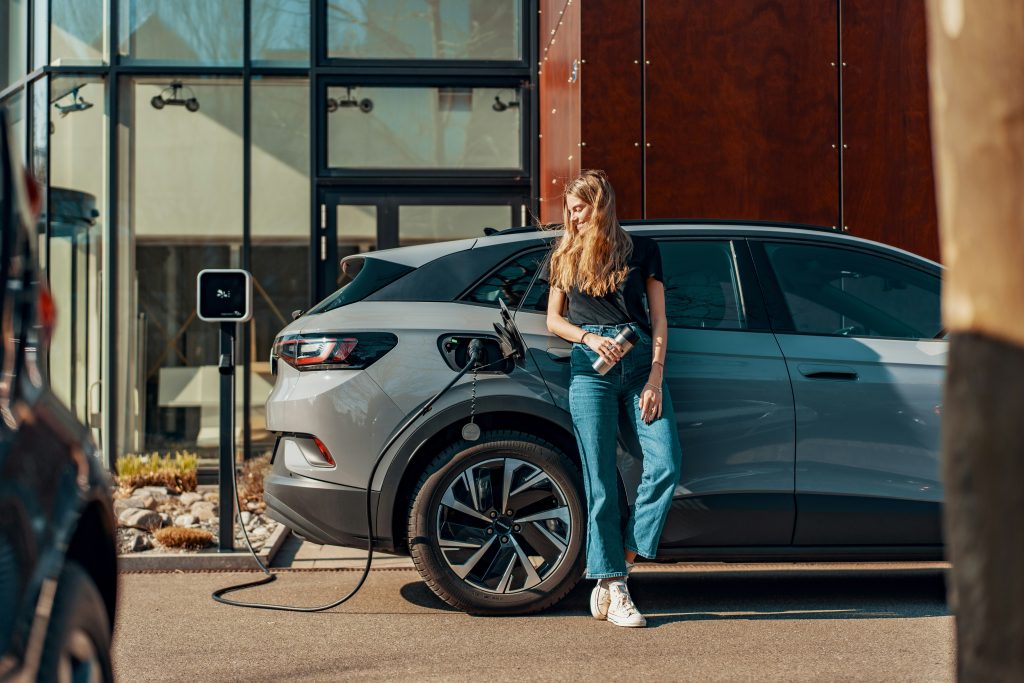
These figures reflect one of the main challenges discussed during the summit: ensuring that energy communities do not become merely a legal structure for developing collective self-consumption schemes. Their potential is much greater: an energy community can become a driver of local energy initiatives, promoting building renovation, shared storage, electric mobility, electrification of energy uses, demand-side management or activities relating to Energy Savings Certificates.
To achieve this, communities will need to participate more actively in the energy system and have governance models that allow them to introduce new activities as they mature.
Local energy communities and the role of public authorities
The ECODES report shows that energy communities remain predominantly small and local: 39.1% have fewer than 20 members, while another 31.7% have between 21 and 50, and only a small proportion exceed 200 members. The movement also retains a strong rural dimension, with 65.5% located in rural areas, compared with 22.5% in urban areas, 7.5% linked to neighbourhoods and 4.4% in industrial settings.
Growth in cities could offer particularly promising opportunities. Urban energy communities can reach large numbers of consumers while including vulnerable households that often cannot install individual self-consumption systems. They can therefore become a tool to tackle energy poverty. According to ECODES, 70.7% of energy communities address or plan to address a social issue, with energy poverty the most frequently mentioned concern, present in 51% of them. Some communities already include mechanisms to allocate part of the energy generated or the project’s benefits to vulnerable households.
Local authorities can play an important role in accelerating these projects. Their involvement builds public confidence, and they may have rooftops, buildings and other public spaces suitable for renewable energy installations. The Summit highlighted that initiatives led or supported by local authorities can progress more easily, although significant barriers remain around granting the use of public spaces, procurement and administrative procedures. Some regional initiatives are developing mechanisms to simplify these processes and improve coordination between public authorities, energy communities and distribution system operators.
However, access to space for solar panels needs to be accompanied by trust and effective public engagement. An energy community must explain clearly what it offers citizens, what responsibilities it entails and how it can improve their local area. Awareness-raising needs to extend beyond technical events and reach people in everyday settings. Markets, neighbourhood associations, cultural activities, shops and local events can be more effective places to explain an energy concept that remains unfamiliar to a large part of the population.
Regulation data and practical support to unlock growth
Three needs were repeatedly raised during the congress: a stable regulatory framework, awareness-raising and support, and tools that simplify management. Projects need clear and predictable rules defining their activities, rights and obligations. Alongside technical expertise, they also require community engagement, citizen participation and sound governance. Straightforward tools for administrative, energy and financial management are equally important, as many initiatives slow down because of a combination of administrative, technical, legal and decision-making delays.
Significant regulatory changes have taken place in 2026. Royal Decree-law 7/2026 has introduced measures that may support collective self-consumption and energy communities, including extending the maximum distance between generation and consumption to 5 kilometres for certain collective self-consumption models, introducing the role of self-consumption manager and providing new tools for local authorities to promote these projects. By expanding the geographical area within which a shared energy project can operate, these changes open up promising possibilities for neighbourhoods, municipalities and industrial estates. However, specific regulatory provisions clarifying how energy communities operate in Spain are still pending. During the III Summit, representatives of the Ministry for the Ecological Transition indicated that regulatory work continues to progress, without specifying a publication date.
Access to data remains another essential barrier. An energy community seeking to optimise generation, consumption, storage or flexibility needs precise information about its members’ energy use, yet straightforward access to aggregated meter data remains difficult. Participants at the Summit called for better access to these data and pointed to the current limitations of tools such as Datadis. Resolving this issue will be particularly important if communities are to move towards active demand-side management, shared storage or the provision of services to the electricity system.
Energy communities also face delays involving distribution system operators, administrative processes that can take months and difficulties in financing the initial investment. These obstacles have a less visible consequence: they wear down the people driving the projects. Many communities are established through the efforts of small groups of citizens, associations or technical experts who volunteer their time and resources. When establishing an entity, securing the use of a rooftop or connecting an installation takes months, sustaining the group’s motivation becomes much more difficult. Reducing administrative delays is therefore also a way to protect the citizen participation that sustains these projects.
From consumers to participants in the energy system
Perhaps this is the greatest contribution energy communities can make: transforming people’s relationship with energy. Citizens can move beyond simply receiving a bill to participating in decisions about how energy is generated, shared, stored or used in their local area. Their future should therefore extend beyond self-consumption alone.
With a stable framework, access to information, funding, suitable tools and sound governance, they can become actors capable of promoting energy renovation, storage, sustainable mobility, demand-side management and solutions to energy poverty.
Spain already has 837 energy communities, but only 10.3% of municipalities currently have one, according to ECODES. There is therefore substantial room for growth. Regulation is progressing. The number of projects is increasing. Public authorities are beginning to develop support tools, and there are more and more practical experiences to learn from. The challenge now is to move from creating energy communities to enabling them to fulfil their potential.
Energy communities have significant scope for growth in Spain, but the next step is to enable them to evolve beyond self-consumption and gradually incorporate storage, demand-side management, mobility, energy renovation and other services. This will require a clear regulatory framework, simpler management, access to data, funding and governance models that can support their growth.
At olivoENERGY, we closely follow this development and work to support energy communities and other sector stakeholders in developing models that enable them to fulfil their potential within an increasingly distributed, flexible and participatory energy system.
